


शासक और इमारते

प्र० धार्मिक इमारत एवं धर्मनिरपेक्ष इमारत से आप क्या समझते है ?
उत्तर :- धार्मिक इमारत :- धार्मिक इमारतों में मंदिर, मस्जिद, मकबरा इत्यादि बनाया जाता है। इन्हे धार्मिक इमारत इस कारण से कहा जाता है की इनका संबंध किसी -न-किसी धर्म से संबंधित होता है।
धर्मनिरपेक्ष इमारत :- धर्म निरपेक्ष इमारतों में किले, महल, हवेली इत्यादि बनाया जाता है। इन्हे धर्मनिरपेक्ष इमारत इस कारण से कहते है क्यूंकि इनका संबंध किसी धर्म से नहीं होता है। इन स्मारको द्वारा हमे तत्कालीन प्रौद्योगिकी, कौशल एंव तकनिकी का ज्ञान होता है।
प्र० ताजमहल के निर्माण में कितने वर्ष लगे। इतना समय क्यों लगा ?
उत्तर :- ताजमहल के निर्माण में 22 वर्ष लगे। इसके निर्माण में इतना समय इसलिए लगा क्यूंकि इसके निर्माण के लिए बगदाद तथा शिराज से हस्तकला विशेषज्ञ, गुंबद निर्माण कला के लिए कुस्तुन्तुनिया से, फूल - पत्ती की खुदाई हेतु बुखारा से, शिखर निर्माण एंव बाग बगीचा निर्माण के लिए समरकंद से कुशल विशेषज्ञ को बुलाया गया था।
प्र० हुमायूँ स्थापत्य कला के विकास पर ध्यान क्यों नहीं दे पाया ?
उत्तर :- मुगलकालीन स्थापत्य की शुरुआत बाबर के समय से होती है लेकिन इसका पुत्र हुमायूँ का अधिकांश समय अपने खोये हुए साम्राज्य को पाने की कोशिशों में बिता एंव भारत से बहार रहा। अत: वह स्थापत्य कला के विकास पर ज्यादा समय नहीं दे पाया। उसने फतेहबाद (हिसार) में फारस शैली में एक मस्जिद का निर्माण कराया।
प्र० ताजमहल में मकरान का संगमरमर का ही प्रयोग क्यों किया गया ?
उत्तर :- मकरान का संगमरमर का प्रयोग इसलिए किया गया क्यूंकि इस संगमरमर से हस्तकला निर्माण, फूल-पत्ती की खुदाई, शिखर निर्माण,सुन्दर सजावट का काम अच्छी तरह होता है। यह संगमरमर जोधपुर के "मकराना" नामक स्थान से मिलता था।
प्र० हुमायूँ के मकबरे की प्रमुख विशेषता क्या थी ?
उत्तर :- हुमायूँ के मकबरे की निम्नलिखित विशेषताएं है :-
(क) भारत का यह पहला मकबरा है, जो दोहरी गुंबद का है।
(ख) इसे ताजमहल का पूर्वगामी कहा जाता है।
(ग) इस मकबरे में पहली बार चार बाग पद्धति का प्रयोग हुआ था।
(घ) मुग़ल घराने के सर्वाधिक शासक इस मकबरे में दफ़नाये गए है।

प्र० क़ुतुब मीनार पर टिप्पणी लिखे।
उत्तर :- क़ुतुबमीनार पहली इमारत थी जिसमे इस्लामी प्रभाव स्पष्ट रूप से दिखाई पड़ता है। क़ुतुब मीनार का निर्माण कुतुबुद्दीन ऐबक ने अपने गुरु ख्वाजा कुतुबुद्दीन बख्तियार काकी की स्मृति बनवाया लेकिन इसे पूर्ण नहीं करा पाया। इल्तुतमिश ने इसे पूरा करवाया।
प्र० गोपुरम क्या है ?
उत्तर :- राष्ट्रकूट राजा कृष्ण प्रथम द्वारा महाराष्ट्र के एलोरा में निर्मित कैलाश मंदिर आठवीं शताब्दी के भव्य मंदिरो में से एक है। इस मंदिर का निर्माण एक ही पत्थर को तराश कर बनाया गया। मंदिर में घुसने का एक बड़ा रास्ता है जिसे गोपुरम कहते है।
प्र ० पित्रदुरा शैली से आप क्या समझते है ?
उत्तर :- पित्रदुरा एक वस्तु शैली थी जिसका प्रयोग शाहजहाँ शासनकाल में बनी इमारतों में ज्यादातर हुआ। इस शैली के अंतर्गत उत्कीर्ण संगमरमर अथवा बलुआ पत्थर पर रंगीन, ठोस पत्थरो को दबाकर सुन्दर तथा अलंकृत नमूने बनाये जाते थे।
प्र० दीवान-ए-आम से आप क्या समझते है ?
उत्तर :- दीवाने - ए - आम एक आयताकार कक्ष है। यह खम्भों पर निकली हुई बरामदों की कक्षा थी। अकबर एक सिंहासन पर बैठता था और अपने मंत्रियों से सलाह-मशविरा करता था। मनसबदारो एंव नौकरो के लिए भी मेहराबी बरामदा दीवान-ए-आम बना था।
प्र० दीवान-ए-खास से आप क्या समझते है ?
उत्तर :- दीवाने-ए-खास एक वर्गाकार भवन है। इसके मध्य में बने ऊँचे चबूतरे पर बैठ कर बादशाह अपने कर्मचारियों की बहस सुनता था। इसी में अकबर का प्रसिद्ध इबादतखाना था। जहां प्रत्येक शुक्रवार को विभिन्न धर्मो के विद्वानो का विचार-विमर्श सुना करता था।



भारत की यूनिस्को की विश्व धरोहर सूचि


➤सांस्कतिक वर्ग
➤मिश्रित श्रेणी
----------------
-----------------------------XXXX-----------------------------
मूर्तिकला और प्रमुख स्तूप

मूर्तिकला
प्रमुख स्कूल
➤ गांधार कला
-------------
* इस कला का उदय कनिष्क के समय पहली शताब्दी में हुआ।
* इस कला शैली की मुर्तिया पाकिस्तान एंव तक्षशिला तथा अफगानिस्तान से प्राप्त हुआ।
* इस कला शैली में बुद्ध की मूर्तियों तथा उनके जीवन से संबंधित मूर्तियों का निर्माण किया गया है। इसमें बुद्ध की वस्त्रयुक्त, घुंघराले बाल,मूंछ,वस्त्र सलवटे वाली मूर्तियाँ मिलती है।
* इस शैली को आदर्शवादी शैली के रूप में भी जाना जाता है। इसे भारत-यूनानी या भारत -रोमन कला भी कहा कहा जाता है।
* इसमें बुद्ध की भव्य मूर्तियों के निर्माण में भारतीय कला पर यूनानी एंव हेलिनिस्टिक कला का प्रभाव है।
➤ मथुरा शैली
--------------
* इस शैली में लाल पत्थर से मूर्तियों का निर्माण हुआ है एंव बुद्ध की मानव रूप में मूर्ति बनाई गई।
* इस शैली की प्रमुख विशेषता बुद्ध और बोधिसत्वों की मूर्तियों का निर्माण है।
* इस शैली में बौद्ध,जैन,हिन्दू तीनो धर्मो से संबंधित मूर्तियों का निर्माण हुआ है।
* इस कला के प्रमुख केंद्र मधुरा,तक्षशिला,अहिच्छत्र,श्रावस्ती,वाराणसी,कौशाम्बी थे।
* इस शैली अंतर्गत बुद्ध की धर्मचक्रपरवर्तन मुद्रा, अभय मुद्रा,मुद्रा,भू-स्पर्श, बुद्ध की वस्त्ररहित,बलविहीन,मूंछविहीन अलंकरणविहीन तथा प्रभामंडल युक्त आदि मूर्तियों का निर्माण हुआ है।
➤ अमरावती शैली
---------------------
* इस शैली का विकास दक्षिण भारत में कृष्णा नदी की घाटी में अमरावती में विकसित हुई थी।
* इस शैली का विकास सातवाहनों के काल में हुआ था।
* इस शैली में अमरावती और नागार्जुन कोंडा के स्तूप बनाए गए।
* इस शैली में पौधो,फलो,कमल तथा मूर्तियों में जीवन दृश्यों का अंकन किया गया है।

प्रमुख स्तूप
➤ सारनाथ स्तूप
----------------------
* सम्राट अशोक ने इस स्तूप का निर्माण 249 ईसा पूर्व में सारनाथ में करवाया था।
* महात्मा बुद्ध ने अपना पहला उपदेश यहीं दिया था।
➤ धमेक स्तूप
* यह स्तूप सारनाथ में है।
* यह पत्थर और आंशिक रूप से ईंटो की बनी हुई है यह बेलनाकार संरचना है।
* यह भगवान बुद्ध के द्वारा अपने पांच शिष्यों के पहले धर्मोपदेश की पुण्यस्मृति में बनाया गया था।
* इस स्तूप की नींव अशोक के समय में रखी गई थी इसका विस्तार कुषाण काल में हुआ गुप्त काल में यह पूर्णत: तैयार हुआ।
➤ अमरावती स्तूप
-----------------------
* अमरावती स्तूप को महाचैत्य के रूप में भी जाना जाता है।
* इसका निर्माण सम्राट अशोक के द्वारा किया गया था।
* स्तूप पर की गई नक्काशियां,बुद्ध और उनकी शिक्षाओं एंव जीवन की कहानी का चित्रण करती है।
➤ साँची स्तूप
* यह मध्य प्रदेश के भोपाल में स्थित है।
* इसका निर्माण अशोक के द्वारा किया गया था।
* स्तूप इस की खोज 1818 में हुआ था।
* साँची में स्तूप संख्या - 1 या महान स्तूप सबसे महत्वपूर्ण स्मारक है। इसमें ब्राह्मी लिपि के शिलालेख है।
* यह स्तूप बुद्ध के 'महापरिनिर्वाण' का प्रतीक है , जिसे वर्ष 1989 में यूनेस्को द्वारा 'विश्व विरासत' का दर्जा प्रदान किया गया।
➤ भरहुत स्तूप
---------------------
* भरहुत स्तूप मध्य प्रदेश के बुंदेलखंड में स्थित है।
* यह स्तूप शुंगकालीन स्तूप है ,
* इस स्तूप में चार तोरण द्वार थे। इन पर जातक कथाओ का उल्लेख किया गया था।
* कनिंघम ने सर्वप्रथम 1873 ई० में इस स्थल का पता लगाया था।
चैत्य
* चैत्य का शाब्दिक अर्थ चिता है । अर्थात चैत्य वे स्मारक थे जहां महापुरुषों की अस्थियाँ राख गाड़कर रखे जाते थे।
* चैत्यगृह दो प्रकार के होते है - (1) गुहा चैत्य (2) संरचनात्मक चैत्य
* चैत्य हीनयान तथा महायान से संबंधित है।
प्रमुख चैत्य
➤ कार्ले चैत्य
-------------------
* महाराष्ट्र में लोनावला
➤ नासिक चैत्यगृह
---------------------
* सातवाहन कालीन
* महाराष्ट्र के नासिक में 200 ई० पू ० की पाण्डुलेण नामक बौद्ध गुफाओ का एक समूह है , जिसमे 16 विहार और एक चैत्यगृह है।
➤ भाजा चैत्यगृह
--------------------------
* 200 ई० पू० निर्मित यह महाराष्ट्र के लोनावाला के पास पुणे जिले में है।
➤ पीतलखोर चैत्यगृह
* यह महाराष्ट्र के औरंगाबाद जिले में स्थित है।
➤ वेदसा चैत्यगृह
* यह कार्ले चैत्यगृह के दक्षिण में स्थित है।
----------------------------------xxxxxxxx--------------------------
सल्तनतकालीन वास्तुकला


.................................
* इस शैली का विकास गुलाम वंश से लोदी वंश के काल में हुआ था।
* समय अवधि :- 1192 से 1557 तक
➤गुलाम वंश :-
⧭कुतुबुद्दीन ऐबक
.....................................
(1) कुव्वत-उल-इस्लाम मस्जिद
भारत में निर्मित पहला मस्जिद
इसका निर्माण रायपिथोरा के किले के स्थल में हुआ
'इंडो-इस्लामिक शैली ' में निर्मित स्थापत्य कला का पहला उदाहरण।
(2) कुतुबमीनार
* ऐबक द्वारा कुतुबुद्दीन बख्तियार काकी की याद में
* 1192 प्रारम्भ एंव 1232 में इल्तुतमिश ने पूर्ण किया।
* इस इमारत में कुरान की आयतें लिखी है।
(3) अढ़ाई दिन का झोपड़ा
* अजमेर(राजस्थान) में है
* यह एक मस्जिद है।
* यह मस्जिद 1192 बननी शुरू हुई और 1198 में पूर्ण
* इस मस्जिद का निर्माण एक संस्कृत विश्वविद्यालय के अवशेषों से निर्मित है जो हिन्दू एंव जैन मंदिर के अवशेष से बना था
* यह भारत में सबसे पुरानी मस्जिदों में से एक
⧭इल्तुतमिश
............................
* मकबरा निर्माण शैली का जन्मदाता इल्तुतमिश को माना जाता है।
*अपने पुत्र नासिरूद्दीन महमूद की याद में 1231 में सुल्तानगढी का मकबरा बनवाया था , अष्टकोणीय , सल्तनतकालीन पहला मकबरा
* बदायूँ में जामा मस्जिद, नागौर में अतारकिन का दरवाजा , हौज-ए-शम्सी का निर्माण।
⧭ बलबन
...........................
* लाल महल नाम से अपना मकबरा बनवाया। शुद्ध इस्लामिक शैली का पहला मकबरा। मेहराब का पहली बार वास्तविक प्रयोग।
➤खिलजी वंश
⧭अलाउद्दीन खिलजी
.................................
* सीरी महल
* हजार स्तम्भों वाला महल
* अलाई दरवाजा (1310-11 ) का निर्माण , जिसमे पहली बार वैज्ञानिक पद्धति का प्रयोग किया गया था।
* सीरी के किले के पास ही उसने हौज-ए- अलाई और हौज-ए-खास का भी निर्माण करवाया था।
➤तुगलक वंश
* ग्यासुद्दीन तुगलक ने तीसरी दिल्ली के नाम से तुगलकाबाद नगर बनवाया, जिसमे 52 दरवाजे थे।
* मुहम्मद बिन तुगलक ने दिल्ली के पास जहांपना नगर तथा तुगलकाबाद के पास आदिलाबाद का किला बनवाया।
* फिरोजशाह तुगलक के काल में फिरोजाबाद जिसे कोटला फिरोजशाह भी कहा जाता है, का निर्माण किया इसे पांचवी दिल्ली के नाम से भी जाना जाता है।
* फिरोजशाह ने दिल्ली में पहला अष्टभुजाकार मकबरा खान-ए-जहां तिलांगनी का मकबरा बनवाया।
* फिरोजशाह ने काली मस्जिद,खिरकी मस्जिद,काबा मस्जिद,निजामुद्दीन औलिया की दरगाह तथा जौनपुर नामक नगर की स्थापना की।
उपकार वस्तुनिष्ट सामान्य ज्ञान


SUPER FAST HISTORY
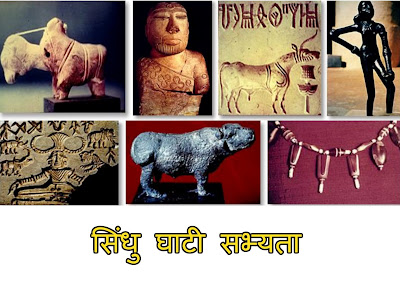
सिंधु घाटी सभ्यता
महत्वपूर्ण तथ्य
* प्रथम अवशेष "हड़प्पा" में प्राप्त हुआ इसलिए हड़प्पा सभ्यता कहलाया।
* सभ्यता की खोज का श्रेय रायबहादुर दयाराम साहनी को जाता है।
* 1921 में सर जॉन मार्शल के निर्देश में खुदाई करवाई की गयी।
* उत्तर में मांदा (जम्मू) , दक्षिण में दैमाबाद, पूर्व में आलमगीरपुर पश्चिम में सुतकागेंडोर।
* आकृति - त्रिभुजाकर
* क्षेत्रफल - 12,99,600 वर्ग किमी 0
* C-14 पद्धति के अनुसार सर्वमान्य काल 2500 ई० पू ० से 1750 ई ० पू ० तक।
* हड़प्पा सभ्यता एक आद्ध ऐतिहासिक है क्योंकि लिखित विवरण पढ़ा नहीं जा सका है।
* परवर्ती हड़प्पा को झांगर संस्कृति भी कहा जाता है।
* यह एक Bronze सभ्यता है।
* सभ्यता के मूल संस्थापक - प्रोटो ऑस्ट्रेलॉयड अल्पाइन और मंगोलायड (सर्वाधिक) .
* पिग्गट के अनुसार हड़प्पा और मोहनजोदाडो जुड़वाँ राजधानी थी।
* मुख्य शहर- हड़प्पा,मोहनजोदाड़ो,चन्हूदड़ो,लोथल,कालीबंगा,धौलावीरा।
* सिंधु सभ्यता के देशी विकास के प्रमाण चार स्थलों से मिले है - मेहरगढ़,आमरी,कालीबंगा,लोथल।
* निर्माण कार्य के लिए मानकीकृत आकार के पक्की ईंटो का प्रयोग होता था।
* अधिकतर ईंट खुले सांचे में बनती थी।
* विश्व में सर्वप्रथम कपास उगाने श्रेय हड़प्पा वासियो को है।
* गेंहू और जौ मुख्य फसल थे।

* अन्य फसले खजूर,सरसों,तिल,कपास,मटर,चावल।
* दो प्रकार के गेंहू - कल्बहिट एंव ड्वार्फ।
* चावल रंगपुर एंव लोथल में ही पाया गया है।
* गन्ना उपजाने का प्रमाण नहीं मिला है.
* खेतो को जोतने के बजाये कोड़ा जाता था।
* मुहरो पर बिना कूबड़ वाले सांड के चित्र अंकित ।
* ऊंट की अस्थि कालीबंगा से मिले है।
* हाथी और घोडा पालने का साक्ष्य नहीं मिला है।
* भारत में चांदी सर्वप्रथम सिंधु सभ्यता से ही मिला है।
* अधिकतर बर्तन सादे थे बहुरंगी कम थे।
* मुहरे सेलखड़ी की बनती थी और इन्हें आरी से काटकर बनाया जाता था।
* लोथल तथा चन्हूदड़ो में कार्नेलियन के मनके बनाए जाते थे।
* हड़प्पा के धातु शिल्प में तांबे और कांसे के भव्य बर्तन महत्वपूर्ण है।
*सभी विनिमय सम्भवत: वस्तु विनिमय प्रणाली द्वारा किया जाता था
*सुमेर (मेसोपोटामिया आधुनिक ईराक ) के ग्रंथो में सिंधु सभ्यता के लिए 'मेलुहा शब्द का प्रयोग किया गाय है।
* विदेशी व्यापार मुख्त: मेसोपोटामिया और बहरीन से होता था।
* आयात की वस्तु :- सोना,तांबा,टीन,लाजवर्द,फिरोज जामनी,शंख।
*निर्यात की वस्तु :- गेंहूँ,जौ,मटर ,तिलहन,कपास की वस्तु,मिट्टी के बर्तन,कार्नेलियन मनके,सीप की वस्तुएं,टेराकोटा की मूर्तियां, हाथी के दांत।
* हड़प्पा एंव मोहनजोदड़ो से प्राप्त कई मुहरों पर जहाजों की आकृतियाँ प्राप्त हुई है।
* बंदरगाह नगर :- सुत्कांगे डोर,बालाकोट ,लोथल।
* 6 बड़े नगर :- मोहनजोदड़ो,हड़प्पा,गणवारीवाला,धौलावीरा,राखीगढ़ी,कालीबंगा।
* ,मनोरंजन हेतु - मछली पकड़ना,शिकार खेलना,पशु-पक्षियों को लड़ाना,चौपड़ व पासा खेलना।
* पर्दा प्रथा व वेश्यावृति का प्रचलन था।
* शवों को जलाना (मोहनजोदड़ो ) व दफ़नाने (हड़प्पा ) .
* लोथल व कालीबंगा में युग्म समाधि।
* विनाश का प्रभावी कारण - बाढ़
* समाज - मातृसत्तामक
* मातृदेवी की उपसाना - सर्वाधिक प्रचलित
* लिपि - चित्रात्मक
* मिठास के लिए शहद का प्रयोग
* घोड़े के अस्थि पंजा - सुरकोटदा,कालीबंगा,लोथल।
* धरती - उर्वरता देवी।
* वृक्ष व शिव की पूजा का प्रचलन।
भारत में प्रारम्भिक यूरोपीय बस्तियाँ
THE VEDIC CIVILIZATION
• Many antiquarians have given different speculations with respect to the first place of the Aryans. Be that as it may, the Central Asian Theory given by Max Muller, is the most acknowledged one. It expresses that the Aryans were semi-traveling peaceful individuals around the Caspian Sea in Central Asia.
• They entered India presumably through the Khyber Pass (in the Hindukush Mountains) around 1500 B.C.
• The heavenly book of Iran 'Zend Avesta' demonstrates section of Aryans to India by means of Iran. • The early Aryans did not need to look courses to Indian sub-mainland; for the Harappans had crossed the high goes of the Hindukush and achieved the center course of the Amu Darya where they had set up an exchanging post at Shortughai.
• In the Rigvedic period, the nobles were encouraged to eat from an indistinguishable vessel from the vis for achievement.
• Metal came to be referred to as Ayas and Iron as Krishanayas (Black Metal).
• The Vedic writings might be separated into two wide ordered strata: the Early Vedic (1500-1000 B.C.) when the vast majority of the songs of the Rig Veda were formed and the Later Vedic (1000-600 B.C.) when the staying three Vedas and their branches were created.
Early Vedic or Rigvedic Period (1500-1000 B.C.)
• The Rig Veda is an accumulation of supplications offered to Agni, Indra, Varuna and different divine beings by different groups of writers and sages.
• From Rigveda, we come to realize that there were 33 divine beings that time who were isolated into three classifications viz., magnificent divine beings, barometrical god, and natural divine beings. Varuna, Surya, Aditi, Savitri were superb divine beings. Indra, Rudra, Maruts and so forth were climatic divine beings. Agni, Soma, and Prithvi were natural divine beings.
• Four streams of Afghanistan are plainly portrayed in the Rigveda. These are: Kubha, Krumu, Gomati (Gomal), Suvastu (swat).
• It comprises of ten Mandala or books of which Book II to VII is the simplest part. Book I and X appear to have been the most recent augmentations.
• In the Rigvedic period, the dead man's spirit is said to leave to the waters of the plants.
• Since the Aryans got through the mountains, which were viewed as the homes of their divine beings, these are over and again said in the Rigveda. Meru, a mountain past the Himalayas, is a glad awesome dwelling place the Mahabharata and the Puranas.
• The Rig Veda has numerous things in a similar manner as the Avesta, which is the most seasoned content in the Iranian dialect. The two writings utilize similar names for a few Gods and notwithstanding for social classes.
• The historical backdrop of the later Vedic period is construct predominantly in light of the Vedic writings which were gathered after the age of the Rig Veda. These incorporate the three Vedas – Samveda, Yajurveda, Atharvaveda and the Brahamanas, the Aranyakas, the Upanishads and the Sutras.
• The accumulation of the Vedic psalms or mantras were known as Samhitas.
• For reasons for singing, the supplications of the Rigveda were set to tune and this adjusted gathering was known as the Samveda Samhita.
• The Yajurveda contains the songs as well as the customs which need to go with their recitation.
• The Atharvaveda is totally unique in relation to the next three Vedas. It contains charms and spells to avoid disasters and infections. Its substance toss light on the convictions and practices of the non-Aryans. Atharvaveda is the most important of the Vedas after the Rig Veda for the history and humanism.
• All the Vedic writing is as one called the Shruti and they incorporate separated from the four Vedas, the Brahamanas, the Aranyakas and the Upanishads.
• The Brahamanas are a progression of writings that took after the Vedic samhitas. Every Veda has a few bhramanas appended to it. These are custom writings.
• Brahamanas connected to the Rigveda are Aitareya, Kaushitaki (created by Hotri cleric). Brahamanas joined to Samveda are Jamini, Tandyamasha, Panchavis, Chhandogya (formed by Udgatripriest). Brahamanas appended to Yajurveda are Satpatha Brahmana (formed by Adhvaryu cleric). Brahamanas appended to Atharvaveda are Gopatha Brahamana.
• The Brahamanas toss light on the socio-political existence of the Aryans and frame a kind of clarification of their religion, particularly give up. They likewise contain ceremonial formulae for the particular Vedas and its ministers.
• The Aranyakas are timberland books that are settlements on mystery and theory and are finishing up segment of the Brahamanas. They clarify the power and imagery of yield. They lay accentuation not on sacrifi ce but rather on reflection. They are infact restricted to give up and a considerable lot of the ceremonial practices. Their anxiety is on good ideals. They shape an extension between the method for the works (karma-marga, supported by the Brahamanas) and the method for information (gyan-marga, upheld by the Upanishads). Some vital Aranyakas are Aitreya Aranyaka, Kaushitaki Aryanka and Taittiriya Aranyaka.
• The Upanishads contain philosophical theories. They are by and large called Vedanta which implies the end of the Vedas. One reason is that they came toward the finish of the Vedic period or that they were educated toward the finish of the Vedic guideline. These writings were aggregated around 600 B.C. furthermore, scrutinized the customs also, laid weight on the estimations of right conviction and information. They underscored that the information of the self and the atma ought to be procured and the connection of atma with Brahma ought to be legitimately caught on.
• The ten Upanishads are: Ishopanishat, Kenopanishat, Kathopanishat, Parshnopanishat, Mandukopanishat, Koushikopanishat, Thaittariyopanishat, Chandogyopanishat and Brihadaranyaopanishat. These are discourses annexed to the Aranyakas and arrangement mostly with logic and religion.
• The Smriti are the helper treatises of the Vedas or their supplements. It alludes to that writing that has been passed on from one era to the next. Manusmriti composed by Manu is the most established of all the Smritis.
• The Puranas are 18 in number, of which the Bhagawat Purana and Vishnu Purana are the most essential.
Land Spread
• The early Aryans settled in eastern Afghanistan, present day Pakistan, Punjab and parts of western U.P. The entire area in which the Aryans fi rst settled in India is known as the Land of Seven Rivers or Sapta Sindhava (the Indus and the fi ve tributaries and the Saraswati).
Political Organization
• The political association was of monarchial shape. The tribe was referred to as Jan and its ruler as Rajan. He was the pioneer in fight and defender of the tribe. His offi ce was not genetic and was chosen among the family's men. The Rajan was not a flat out ruler, for the administration of the tribe was to some degree the duty of the tribal boards like sabhas, samitis, gana and vidhata. Indeed, even ladies went to gana and vidhata as it were.
• Many factions (Vish) shaped a tribe. The fundamental social unit was the Kula or the family and the Kulapa was the leader of the family.
• The ruler was helped by various officers of which Purohita was the most imperative. Next critical functionary was the Senani (pioneer of the armed force) despite the fact that there was no general or, then again standing armed force. The military method of the Aryans was highly best in class. The Aryans succeeded wherever in light of the fact that they had chariots driven by steeds.
• There was no normal income framework and the kingdom was kept up by intentional tribute (Bali) of his subjects and goods won in fight.
Social Life
• The term Varna was utilized for shading, the Aryans being reasonable and the Dasas dull.
• Family was the essential unit of society and was patriarchal in nature. In any case, ladies delighted in equivalent control with men. Marriage was generally monogamous and constant, yet there are a couple examples of polyandry, levirate and dowager marriage. There are no cases of youngster marriage. The eligible age appears to have been 16 to 17.
• Both share and lady of the hour cost were perceived amid the Early Vedic period.
• "Arya" came to allude to any individual who was regarded.
• Aryans were attached to soma, sura, sustenance and dresses. Soma was smashed at penances and its utilization was sanctifi ed by religion. Sura was simply common and more strong and was disliked by the religious artists.
• Throughout the Vedic period, instruction was granted orally. Not at all like the Harappans, the Aryans try not to appear to have an arrangement of composing.
• The Aryans adored music and played the flute, lute and harp. There are references to singing and moving young ladies. Individuals likewise took pleasure in betting. They delighted in chariot dashing. Both men and ladies wore trimmings.
Economy
• Their bronze smiths were exceedingly gifted and delivered apparatuses and weapons much better than those of Harappa culture. There were craftsmans like craftsmen, weavers, shoemakers, potters, and so on.
• Aryans took after a blended economy – peaceful and horticultural – in which steers played a prevalent part. The vast majority of their wars were battled for bovine (most imperative type of riches). Dairy cattle were in actuality a sort of cash and values were figured in heads of steers (man's life was comparable to that of 100 dairy animals), however they were not held sacrosanct at the time. The steed was practically as essential as the bovine.
• Standard unit of trade was the cow. In the meantime coins were likewise there (gold coins like Nishka, Krishnal and Satmana). Gavyuti was utilized as a measure of separation and Godhuli as a measure of time.
• Reference to cash loaning first happens in Shatapatha Brahmana, which portrays a usurer as Kusidin.
• Lived in sustained mud settlements.
• Physicians were then called 'Bhishakas'.
• The staple yield was "yava" which implied grain.
Religion
• The Aryans embodied the regular strengths and looked upon them as living creatures.
• The most imperative godliness was Indra who assumed the part of warlord (breaker of strongholds – Puran
EARLY NATIONALISTS AND MILITANT NATIONALISTS
The projects of the activist patriot or the radicals were practically like those of the moderates. Their projects were based on their forerunners' projects and their i.e., the conservatives solid introduction of the character of the British control in India. Be that as it may, they varied from the last in one essential regard, i.e., the radicals requested finish freedom, while the conservatives were content with popularity based self-government as in the settlements of Australia and Canada. In any case, this distinction in their political objectives was not considerable as the conservatives were as greatly inspired by the topic of political power as the radicals. Truth be told, Tilak himself over and over pointed out that there were no genuine distinction between him what's more, the conservatives in regards to the objectives of the national development. The conservatives did not take a stab at finish freedom basically as a result of the inclination that the time was not yet ready for it. It is fascinating to note here that even Tilak had no dithering in backpedaling consistently from the interest for finish autonomy to domain status. In this manner, the fundamental contrast between the early patriots and the activist patriots did not lie in their program or in an alternate meaning of the patriot political objective. The genuine distinction, if there was any, lay in their arrangements or the techniques for battle to accomplish the concurred objectives. As it were, the distinction was not in the projects or what was to be done, yet in the approaches or how it was to be finished.
What were the Extremists' arrangements?
A portion of the radicals veered off from the direct strategy for tranquil and bloodless battle in principle. Practically speaking, in any case they too worked inside its fundamental structure. The precept was to fill in as a fundamental certification to the propertied class that they would at no time be confronted with a circumstance in which their interests may be placed in risk even briefly. The main contrast between the conservatives and the fanatics in this matter was in their mentality towards peacefulness. It involved individual conviction for the majority of the conservatives however down to earth contemplations excessively assumed an essential part in deciding their state of mind towards peacefulness. To the radicals, it was generally a commonsense catalyst. The radicals, consequently, did not censure savagery in that capacity, however they themselves did not turn to brutal techniques. All the more vitally, the fanatics pushed the association of mass battle against British dominion. This was, truth be told, the most imperative and, maybe the main critical distinction between the approaches of the radicals and those of the conservatives. Tilak, Bipin Chandra Pal, Lala Lajpat Rai and different fanatics had limitless confidence in the energy of the masses for activity and in the Indian individuals' ability to shoulder the strain of a delayed political battle against dominion. They trusted that concealment by the legislature would not throttle the mass development. It would rather, teach the general population, excite them advance, fortify their make plans to topple government and prompt an elevated political battle. They consequently, pushed the association of a mass battle against government as an initial phase in making the masses politically dynamic. They discussed spanning the inlet between the informed individuals and the masses however not every one of them.
Distinctive Concept:- The fanatics developed a higher idea of the types of political battle with a specific end goal to enhance the strategies of political activity. At the end of the day, the radicals separated from utilizing the direct types of disturbance gave a call for inactive resistance, to coordinate with the administration and to blacklist, taxpayer driven organization, government courts and government schools and universities. In any case, they were not able actualize this idea completely and therefore, not rise above unsettling (the frame embraced by the conservatives,) however their fomentation was significantly more activist and viable than that of the conservatives on the grounds that the previous had a more extensive base than the last mentioned. P-C-P methodology: The fanatics excessively like the conservatives, had embraced the P-C-P (weight trade off weight) system with a specific end goal to accomplish finished autonomy, Because the radicals gave a few calls for quick freedom, it is anything but difficult to be deluded into imagining that their key approach was deferent. Truth be told, such calls were a piece of a similar general methodology. Each such call was prevailing by an arrangement of quick requests which had minimal direct connection to the interest for prompt and finish autonomy. So what changed after 1905 was not the essential system of P-C-P. The fanatics were not working for the immediate oust of British run the show. They excessively stressed the method of transactions supported by controlled mass activity.
Distinctive Mode:- The radicals did, in any case, change the method of influence or putting weight. They put more noteworthy mass weight behind requests. They moved from intelligent people to the masses to a critical degree; and from remembrances, petitions and resolutions; to parades, exhibition and huge mass developments. The authorizations behind their request were distinctive and far more grounded. In any case, the political progress was still to happen by stages and through trade off, that is, at last through British assent and activity.
Deficiencies:- While perceiving this diverse between the direct and the fanatic times; we ought to likewise make a qualification amongst expectation and the satisfaction. For one even at the stature of the fanatic development in Bengal, the proletariat was not assembled. The distance between the informed fanatic political specialists and the masses was not diminished to any huge degree. Truth be told, the fanatics did not know how to approach the undertaking. Practically speaking what they prevailing with regards to doing was to spread the development more profound among the lower white collar classes who were at that point brought inside the ambit of patriotism in the direct time.
Disappointment:- The disappointment of the radicals definitely prompted progressive psychological oppression. Since the vast majority of the radical pioneers had wrongly characterized their disparities with the conservatives (they had focused on "activity" and gives up instead of on the need to develop an alternate sort of legislative issues), the young fellows brought upon a belief system of "activity" and yield which were soon disappointed with aggressor tumult, requested "move" and took plan of action to individual psychological oppression.
EARLY NATIONALISTS AND MILITANT NATIONALISTS
THE MODERATES
The conservatives did not advocate an immediate battle for the political liberation of the nation,they worked towards various political accomplishments. The most essential of these exercises were:
• finishing of the way toward binding together Indian individuals into a country,
• making of a national political stage,
• uncovering the exploitative character of British colonialism,
• presentation of current legislative issues,
• making of a sentiment self-assurance among Indians,
• advancement of the development of a cutting edge entrepreneur economy in India, and so forth. They were completely mindful of the way that India was a country in making and Indian nationhood was step by step appearing and proved unable, in this way, be underestimated. They were additionally mindful that the political pioneers needed to continually work for the advancement and solidification of the sentiment national solidarity regardless of locale, station or religion. The financial and political requests of the conservatives were planned with a view to join the Indian individuals on the premise of basic monetary and political program.
Conservatives' Program
Moderates craved to make a national political stage on which all Indians having a place with various areas, religions and social classes could concur and which could fill in as the reason for all-India political action whose fundamental point was not recently great government, but rather majority rule self government. The Indian National Congress, for example, was built up separated from different reasons with the would like to give a national political stage and in this way advance close contact and well disposed relations among dynamic patriots from various parts of the nation. From the earliest starting point the conservatives trusted that India ought to in the long run move towards majority rule self-government. However, they didn't request quick satisfaction of this objective. Rather, they proposed a continuous approach towards it. Their prompt political requests were amazingly direct. At first, they requested that Indians ought to be given a vast partake in the administration by growing and transforming the current authoritative Councils. They additionally requested the broadening of the forces of the boards and an expansion in the forces of the individuals who were to be the chosen delegates of the general population. The Indian Councils Acts of 1892 and 1909 were passed fundamentally because of the endeavors of the conservatives, however these Acts did not secure much for the Indians. In any case, by the turn of the nineteenth century, the conservatives gained great ground in their political requests. Their requests were no longer limited to unimportant changes however were stretched out to full self-government, including full Indian control over all enactment and funds, on the model of the self-government states of Canada and Australia. This request was at first made by Dadabhai Naoraji in 1904 and later by Gokhale in 1905. Financial Critique: Exposing the exploitative character of British colonialism and spreading their comprehension of the British lead in India among the general population was another imperative thing on the motivation of the conservatives. They observed all the three types of contemporary monetary misuse, to be specific, through exchange, industry and fund. Understanding that the quintessence of British dominion lay into subordination of the Indian economy to that of Britain, they unequivocally restricted the British endeavors to create in India the essential qualities of the economy, viz., the change of India into a provider of crude materials, a business opportunity for British producers and a field of speculation for capital. Additionally, in each circle of financial life they pushed the decreasing and even severance of India's monetary reliance on England.
Disturbances:- Besides, they sorted out numerous tumults against all the imperative authority financial strategies in view of the frontier structure. For example, they composed a capable all-India disturbance against the surrender of tax obligations on imports from 1857 to 1880 and against the burden of cotton extract obligations in 1849-96. This disturbance assumed a noteworthy part in stirring nation wide national emotions and in teaching the general population with respect to the genuine points and motivation behind British govern in India. In this manner, every one of the endeavors of the conservatives at long last brought about the development of an all-India conclusion that the British were abusing India and subsequently prompting its impoverishment, financial backwardness and being worked on.
Power:- Another essential program of the conservatives was the presentation of current governmental issues in light of the tenet of the sway of the general population and on the idea that legislative issues is not the protect of the decision class as it were. They shaped a few political affiliations, including the Indian National Congress, to spread political instruction and to start political work in the nation. This work was to be founded on new political thoughts, another scholarly view of reality, new financial and political goals, new strengths of battle and resistance and new procedures of political association. It was to speak to a defining moment in belief system, arrangement, association and administration.
Private enterprise:- They likewise needed to advance the development of current entrepreneur economy in India. They appropriately trusted that the British monetary approaches were in charge of achieving the demolish of India's customary workmanship ventures and for blocking the advancement of current businesses. The vast majority of them contradicted the huge scale import of remote capital for interest in the Indian railroads, manors and ventures on the ground that it would prompt the concealment of Indian business people and a further increment in the hold of the British over India's economy and country.
Cure:- The main cure they proposed for the expulsion of neediness was the modernization of Indian life in all fields and, specifically, the improvement of present day businesses, which are basic for the best possible development of an entrepreneur economy. Be that as it may, quick industrialization needed dynamic state support and an arrangement of duty assurance. In this way, they encouraged the British government to help Indian businesses through money related appropriations, advances and assurances through state-supported or controlled banks, by getting abroad and loaning in India, by spearheading state-possessed enterprises in fields, for example, steel and mining which Indian entrepreneurs were excessively frail, making it impossible to enter, however which were basic for modern advancement, by gathering and spreading mechanical and business data and by advancing specialized training.
Imperatives:- The assignment was troublesome for Moderates since Indians were totally new to present day legislative issues. Indeed, even the thought that individuals could arrange themselves politically contrary to their rulers was a novel one. Therefore their work continued preferably gradually and it took the greater part a century to bring the average citizens inside the overlay of present day legislative issues.
BRITISH ECONOMIC POLICIES AND THEIR IMPACT
This from of misuse was an impossible to miss highlight of British pilgrim run the show. In this circle, significant share of riches earned by the British in India through different means was sent out to England, denying India of its benefits. This represented home charge which were expected from India to England by virtue of enthusiasm on obligation, charges for common organization, military organization, expenses of armed force preparing, transport and crusades outside India, other than charge on Indian back, stores, ensured railroads and water system works. The loot of this nature started from Bengal when British procured Diwani rights. The benefits produced using obligation free inland exchange and the surplus from Diwani incomes were utilized to buy Indian merchandise for fare reason. These buys were called 'ventures'. This sort of pay represented about 6 million pounds in the vicinity of 1758 and 1765, which in reality was more than four times the aggregate land income gathering of the Nawab of Bengal in 1765. Notwithstanding these concentrates, there were other charges of the armed force, for example, prizes, annuities and appreciations which must be paid each year. It is said that the annuities payable to the resigned military officers added up to a large portion of the salt duty assembled from the entire of India. The other reason for deplete was the trade rules settled by the British government for India. Through this, India lost a considerable measure of cash. Vast part of the pay rates got by the British officers in India was likewise sent by them out of India. There were additionally European and English dealers, business people, grower, send proprietors, gold-excavators, and so forth who transmitted each year gigantic sums. William Digby ascertained the aggregate deplete up to the finish of nineteenth century and put it at 60,080 million pounds. The weight of home settlements turned out to be a great deal more heightened in the twentieth century retaining considerably bigger amounts of the gainful assets of Indian individuals. Truth be told, the British capital put resources into India was as a general rule initially brought up in India by the loot of the Indian individuals. There were uproarious challenges against this goliath empty of riches out of India. It took a solid shape in the composition of Dadabhai Naoroji, who drove a biting assault against the deplete of riches.
TRADE SYSTEM
The durable aftereffect of pilgrim administer was the auxiliary change realized in the trade framework. The profound going auxiliary changes in the principle areas of Indian economy amid the time of control of modern capital was thought about by new components in the trade framework. The nullification of the East India Company's exchange imposing business model and the expansion in imports of British merchandise constrained the colonialists to give careful consideration to the money related and credit framework in India. In the pre-pioneer period, and also in the seasons of the EIC, the nation had no bound together money related framework. Countless and gold coins of different qualities were available for use. Indeed, even the estimation of the silver rupee was not the same in various parts of the nation. At the season of exchange - at the end of the day, loot - this money related confusion was utilized to get more products out of the nation to enhance the shippers, merchants, and dark advertisers. The industrialization however required a solitary joined fiscal framework. The conversion scale was all the more essential for its advancement since the rupees earned from the offer of products in India must be changed into pound sterling.
New models
By the two Acts of 1818 and 1835, India was put on the silver standard. The silver rupee of a set weight and silver substance was declared the essential money related unit for the entire nation. This had a tendency to balance out the financial income of the pioneer organization and made it conceivable to present the money framework. Be that as it may, the presentation of the money charges, particularly in agribusiness, undermined the laborers' normal economy and decimated the customary monetary ties in the groups, which were established primarily on deal. It likewise made a business opportunity for British produced merchandise and constrained the laborers to deliver items that were sought after in the market and that could be sold for money.
BRITISH INDUSTRIAL POLICY
Since the coming of British, its lone point was the heartless abuse of Indian wealth. The mechanical arrangement was the same from this pattern. This approach demonstrated appalling to the advancement of indigenous free enterprise and industry. By the center of the nineteenth century, Queen Victoria's rule saw Britain collect limitless amounts of money to such a degree, to the point that not every last bit of it could be beneficially used at home. India with its astonishing possibilities of crude materials, shoddy work et cetera pulled in British business people available to be purchased speculations. Rivalry from the recently industrialized countries in Europe and America additionally pursued Britain towards India. Yet, its strategy was not to make India a mechanical entrepreneur economy, but rather to make it a needy and immature economy. Its interests in ranches and mines, jute factories, keeping money, protection, transporting and send out import show up without a doubt noteworthy advancements. In any case, really these were advanced through an arrangement of between locking overseeing office firms which typically joined monetary, business and modern exercises, all working under the umbrella of remote control, continually restraining the improvement of Indian economy. Unhindered commerce strategy, favors appeared to British industry, outside saving money framework working in conjunction with the administration's budgetary and trade approach, and so on made the Indian rising entrepreneur class hysterical. In a few occasions even Indian-controlled endeavors were ruled by outside possessed money related organizations.
Why did the British Introduce Modern Industry in India?
The essential monetary clash between the new Indian bourgeoisie and their British partner was with respect to cancelation of cotton obligations in 1880s. At the point when the frail Indian cotton industry started to create in the 1870s disturbance was instantly brought up in Lancashire and Manchester for the abrogation of the income import obligations which worked likewise on cotton products, where there was rivalry. They were abrogated and in 1882 all import obligations aside from on salt and alcohols, were evacuated. The extension of railroads, rather than helping India, prompted the opening up of unfathomable and until now for all intents and purposes undiscovered markets. The railroad endeavors in India were glaring occasion of state insurance to British capital and circuitous state abundance to British exchange and industry when Britain was gloating of unhindered commerce. Ruler Dalhousie himself conceded that his protest for the presentation of railroads in Indian domain was to convey British capital and undertaking to India, to secure business and social focal points to India and bring into the ports, items from the inside. The railroads turned into a superb means for quickening the fare of crude materials from India and opened up a broad market for British modern items. Subsequently, the railroads helped the transformation of India into a hinterland of British businesses, additionally lessening the odds of indigenous Industrial improvement.
Work:- Policy behind Labor Acts was just another endeavor to diminish the advance of Indian Industry. Work enactments whose honest to goodness thought process was to enhance the states of laborers, proved unable have dismissed the ranch work while enthusiastically attempting to apply the work laws in the cotton and Jute production lines in India. The intention in actuality was not to help work, but rather to debilitate the development of enterprises and particularly cotton industry which was forming into an offered adversary for Lancashire and Manchester. The domain of the plant enactment did not reach out towards the indigo grower under whom cultivators were basically treated like slaves.
Outside Trade:- India's remote exchange which was not gainful to the masses and additionally to the wannabe industrialist class made India to be a unimportant exporter of crude materials and market for in view of Laissez-faire (e.g. tax strategy) and state mediation (e.g. work enactment) adversy affected the ascent of a steady and solid mechanical base. However, amid the main world war, the administration because of military, vital and focused monetary reasons declared that industrialization was its official point in the monetary field, it didn't do much to its encouraging. The modern division was famished of assets and another standard was presented - the guideline of expanded magnificent inclination of favored rates for the section of British made merchandise. The levy strategy which was initially broadcasted to help Indian industry was soon abused for empowering British Industry, costing intensely to the local industry. The magnificent approach continually and energetically kept up and secured the out of date monetary structure of India to strain the rising gainful strengths.